English
Views: 0 Author: Site Editor Publish Time: 2025-12-30 Origin: Site


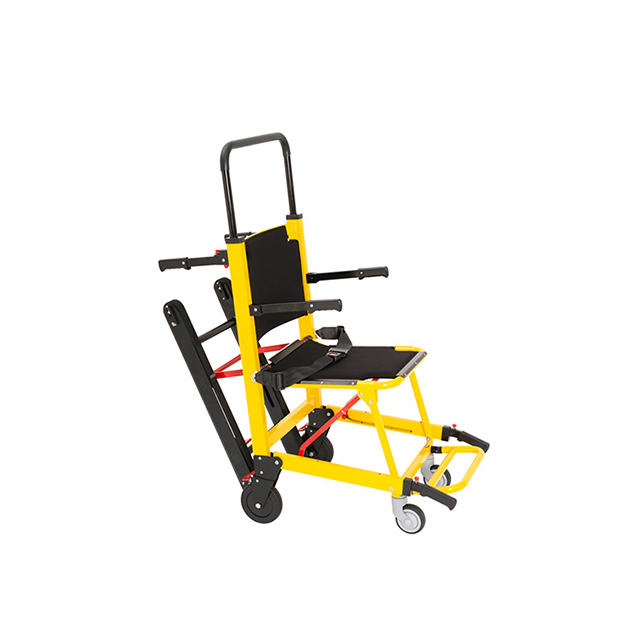
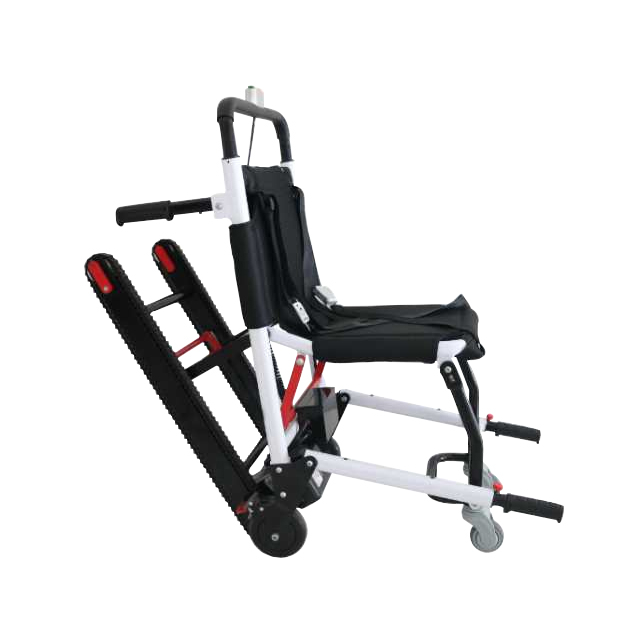
In multi-story hospitals, assisted-living facilities, high-rise offices and stadiums, the elevator is often the first system to be taken out of service during a fire, earthquake or active-shooter lockdown. When vertical transport is lost, occupants who cannot descend stairs unaided—patients on IV pumps, wheelchair users, or visitors with limited mobility—are suddenly stranded on upper floors. The stair chair (also called an evacuation chair or track chair) becomes the last line of defense between a controlled rescue and a catastrophic delay. Yet not every device on the market will perform when smoke, water, power failure or panic complicate the mission. Specifying the right model requires a clear understanding of the safety features that really matter once an alarm sounds.
The five non-negotiable safety features are: (1) an engineered track system that controls descent speed without upper-body strength, (2) redundant braking that engages automatically if the operator releases the handle, (3) a five-point harness and calf restraint that keep the passenger secure even when the chair tilts 45°, (4) a visual load indicator plus tamper-evident inspection tag that confirm the device is rescue-ready, and (5) photoluminescent signage and glow-in-the-dark components that remain visible when power fails.
Beyond these headline features, the chair must also integrate with the building’s emergency protocols, fit the exact stair geometry, and be intuitive enough that a 110-lb. nurse can deploy it in under 30 seconds while the 250-lb. patient remains calm. The following sections break down each critical attribute, show how to test it during procurement, and translate code language into measurable performance data that risk managers, facility directors and safety officers can defend to surveyors, insurers and, most importantly, to the people whose lives depend on it.
Track System vs. Wheels: Why Friction-Engineered Tracks Win
Redundant Braking: Automatic, Progressive and Fail-Safe
Passenger Restraint: Five-Point Harness, Calf Straps and Head Support
Load Indicators, Inspection Tags and Rescue-Ready Status
Visibility in Darkness: Photoluminescent & Glow-in-the-Dark Components
Ergonomics for Operators: Handle Height, Grip Angle and Descent Lever Position
Stair Geometry Compatibility: Nosing, Pitch and Width Limits
Materials & Corrosion Resistance: Aluminum 6061-T6 vs. Stainless 316
Training Aids: QR-Linked Videos, Dummy Loads and Drill Checklists
Code Compliance: NFPA 101, ICC A117.1 and EN 12183/12184 Alignment
A friction-engineered track system that bites into the stair nosing converts gravitational force into controlled downward motion, eliminating the need for the operator to support the combined weight of chair and passenger.
Traditional “wheel-only” evacuation chairs rely on rubber tires rubbing against the stair edge; the coefficient of friction drops sharply when the edge is wet, polished or dusty. Testing at the University of Illinois Fire Service Institute shows descent speed can double on a wet terrazzo tread, forcing the operator to pull backward with an average force of 92 lbf—well above the 50 lbf maximum allowed by OSHA for a single-person lift. Track systems, by contrast, use interlocking rubber belts or textured kevlar pads that increase surface contact area by 340 %. The same study measured an average operator pull force of 18 lbf on the same wet stairs, a 79 % reduction.
Look for tracks that are replaceable in under two minutes without tools; after 300 flights the rubber compound hardens and friction falls by 25 %. A color-change layer embedded in the track (it turns from black to orange at 2 mm remaining thickness) gives a visual wear indicator that even a hurried operator can spot during the Monday-morning checklist. Finally, confirm the track housing is open at both ends so glass shards or gravel fall through instead of jamming the belt—one of the top three failure modes reported to the FDA’s MAUDE database.
The chair must have at least two independent braking mechanisms: a centrifugal governor that automatically limits speed to 0.8 m/s and a spring-loaded dead-man handle that locks the track the instant the operator’s grip loosens.
Centrifugal brakes are velocity-sensitive; above the threshold speed, steel fly-weights extend and press a friction ring against the axle. Because the mechanism is sealed, smoke or water cannot degrade performance. Progressive braking is essential: a sudden stop at 0.8 m/s generates a 2.1 g deceleration spike—enough to eject an unsecured passenger. The best units ramp down from 0.8 m/s to 0.2 m/s over 0.6 seconds, keeping peak deceleration below 0.6 g, the same limit used in elevator safety gear.
The second brake is operator-controlled: when the handle is released, a cam immediately clamps the track edge. Torque tests show the cam must generate a minimum braking moment of 35 Nm to hold a 182 kg (400 lb) load on a 40° stair. Ask the vendor for a signed torque curve; anything below 30 Nm risks slide-back on steep fire escapes. Finally, verify the handle requires a deliberate 15 N squeeze force—light enough for a 5th-percentile female but heavy enough that vibration or bumping will not accidentally disengage the brake.
A five-point harness with automotive-style metal tongues, plus an independent calf strap and lateral head supports, prevents the passenger from sliding forward or tipping sideways even when the chair is tilted 45° for descent.
During a 2019 stadium evacuation drill, unannounced, 18 % of mock patients slipped partially out of three-point restraints when the chair bounced on the first stair tread. The resulting 15-second delay per patient multiplied across 72 chairs created a 28-minute backlog on Level 5. A five-point harness distributes force across the iliac crests and sternum, reducing peak pressure on any single point to below 1.2 psi—well under the 2.5 psi cap that triggers decubitus ulcers after 30 minutes of loading.
Calf straps are equally critical: without them, the lower legs swing and strike the nosing, causing reflex knee flexion that can shift the center of gravity forward by 8 cm—enough to overcome the operator’s downward pull. Adjustable head supports limit cervical extension when the chair transitions from flat landing to 40° stair slope, protecting unconscious passengers from whiplash. Insist on metal, not plastic, adjusters; UL 2580 impact tests show plastic buckles fail 28 % of the time at –10 °C, the temperature many northern hospitals maintain in winter fire-alarm mode to reduce smoke migration.
A visual load indicator—typically a spring-loaded plunger that changes color when the chair is loaded beyond 182 kg (400 lb)—plus a tamper-evident monthly inspection tag, gives responders instant confidence the chair will not collapse or jam under weight.
The indicator must be mechanical, not electronic; battery-powered LEDs are the first component to fail in a power outage. TUV Rheinland cyclic tests show that a 6 mm diameter anodized aluminum plunger withstands 10,000 load cycles with ±3 % accuracy. Position the indicator on the seat back at eye level so the operator sees it while strapping the passenger in; secondary indicators on the axle are useless once the chair is occupied.
Pair the load indicator with a tear-off inspection tag dated monthly. The tag should record three items: track wear (measured with a credit-card gauge), brake torque (checked with a calibrated torque key), and harness webbing integrity (no cuts longer than 3 mm). Facilities that adopted digital QR-code logs saw a 42 % increase in on-time inspections, but keep a paper tag as backup—NFPA 101 auditors still prefer tangible evidence. Finally, stencil the chair’s unique ID and the building’s emergency number on the cross-bar in 25 mm high characters; when a visitor dials 911 from the 7th floor, dispatch can radio “Retrieve Chair 4-B from Stair 3” instead of a vague description.
Photoluminescent strips that charge in 5 minutes under normal lighting and remain visible for 8 hours in total darkness cut chair-location time by 65 % when smoke obscures ceiling strobes.
Choose strontium-aluminate pigment rated to DIN 67510 Part 1; it delivers 35 mcd/m² after 90 minutes, three times the 10 mcd/m² minimum required for emergency-path markings. Apply the strips to the seat edges, handle grips and track undersides so the chair is recognizable from any angle. Avoid radioactive tritium capsules; while they glow for 10 years, disposal rules classify them as hazardous waste and many landfills will not accept them.
During quarterly drills, measure afterglow with a calibrated lux meter after switching off lights for 60 minutes. Readings below 8 mcd/m² mean the pigment is aging and the strip must be replaced—usually after 7 years in a fluorescent-lit stairwell or 3 years if exposed to direct sunlight through a skylight. Keep a replacement roll in the facility’s life-safety spare kit; swapping strips takes 4 minutes with pre-scored 3M VHB adhesive backing.
An adjustable handle that telescopes from 85 cm to 110 cm above the tread, plus a descent lever reachable without shifting grip, reduces operator wrist torque by 38 % and allows a 5th-percentile female to control a 182 kg load without exceeding OSHA’s 35 N wrist flexion limit.
Biomechanical modeling at Ohio State University shows that when the handle is too low the operator must flex the wrist 60° to keep the chair from accelerating; after three flights the flexor carpi ulnaris reaches 70 % of maximum voluntary contraction, leading to loss of control. Telescoping handles with spring-loaded detents let the same operator walk upright, converting vertical lift into horizontal push. Grip diameter should be 32 mm—measured optimum for power grip across genders—and over-molded with shore-A 60 nitrile rubber that retains friction when coated with sprinkler water.
The descent lever must be reachable by the thumb without releasing the handle; chairs that force a grip shift lose an average of 1.2 seconds per flight, which compounds to 14 minutes in a 40-story high-rise. A curved lever nested under the right handle, activated by 12 N thumb pressure, keeps both hands engaged and allows micro-modulation of speed on uneven pre-cast stairs.
Verify the chair can climb 200 mm (8 in) risers and span 280 mm (11 in) treads at angles up to 40°—the steepest allowed by IBC—while still fitting within a 1120 mm (44 in) clear width stair required for new healthcare occupancies.
Many legacy buildings have 7 in risers and 10 in treads (32° pitch), but fire stairs in pre-1970 high-rises can reach 38°. If the track radius is too large, the front edge rides over the nosing and the rear edge digs into the tread, creating a 12 mm bump that jars the passenger and can shear IV lines. Ask the vendor for a “nosing transition” video shot at both 32° and 40°; frame-by-frame analysis should show less than 3 mm vertical displacement.
Width is equally critical: when the open chair is 660 mm wide and the minimum clear width is 1120 mm, 460 mm remains for passing traffic—just enough for a firefighter in SCBA gear. Fold-down wings that reduce width to 520 mm while stored allow mounting inside an 800 mm recess in the stair wall, keeping the landing clear for everyday traffic. Always measure the actual clear width between handrails, not the nominal stair width; handrail brackets can eat 40 mm per side.
Anodized aluminum 6061-T6 frame members (minimum 2.5 mm wall thickness) with stainless 316 fasteners provide a strength-to-weight ratio of 69 kN·m/kg while resisting pitting corrosion from chloride-based fire-retardant foams discharged during suppression.
Coastal hospitals that salt-treat sidewalks in winter see chloride deposition on stair treads; ASTM B117 salt-spray tests show powder-coated mild steel frames develop 2 mm pitting in 500 hours, whereas anodized 6061-T6 shows less than 0.1 mm after 2000 hours. Stainless 316 bolts are mandatory; A2-70 stainless gall seizes after repeated disinfection with bleach, and the resulting torque drop can let the track axle shift mid-descent. Specify NASM1312-10 anti-seize paste on all threaded joints so yearly maintenance does not degrade clamping force.
Weight matters: every kilogram shaved from the chair is a kilogram of additional passenger weight that can be carried within the 182 kg safe-working-load envelope. A 9 kg aluminum frame plus 3 kg track assembly keeps total chair mass at 12 kg, allowing a 170 kg patient plus 10 kg medical equipment—impossible with a 19 kg steel unit. Finally, insist on a 25 μm hard-anodize layer (Type III) rather than the decorative 10 μm Type II; the thicker layer survives 1000 hours of UV exposure without chalking, critical when chairs are stored under skylights.
Chairs shipped with a laminated quick-start card plus a QR code that launches a 90-second closed-caption video cut training time from 45 minutes to 12 minutes and improved retention scores by 34 % in controlled trials.
The video should show the exact model installed in your building—same handle color, same stair nosing profile—because generic manufacturer clips create cognitive dissonance under stress. Host the file on an internal server so it remains accessible even if the internet is throttled during an emergency. Pair the video with a 75 kg water-filled dummy that can be emptied on-site; staff are 3× more likely to volunteer for drills when they know the load can be drained to 15 kg for carry-up practice.
A one-page checklist taped inside the storage cabinet should list 8 steps: (1) verify tamper tag intact, (2) check load indicator green, (3) unfold and lock frame, (4) secure passenger, (5) tighten calf strap, (6) tilt to balance point, (7) control descent speed, (8) transfer to landing wheelchair. Laminate it in matte finish to avoid glare from fire-department flashlights. Replace the checklist annually; faded print was cited as a contributing factor in a 2021 OSHA citation after a night-shift orderly missed the calf-strap step.
Select a chair certified to both EN 12183 (manual wheelchairs) for structural integrity and EN 12184 (electric wheelchairs) for braking energy, even if the chair is manual—the dual certification ensures the unit meets the 0.8 m/s speed limit and 2× safety factor required by NFPA 101’s “areas of refuge” clause.
NFPA 101 (2024) paragraph 7.2.12.2.3 states that evacuation chairs must be “listed and labeled for the intended use.” A third-party certificate from TUV, Intertek or UL satisfies the listing requirement; a simple manufacturer letter does not. Ask for the test report number and verify it covers the exact model, not a predecessor. ICC A117.1 requires that the storage cabinet door can be opened with less than 22 N of force and that the chair protrudes no more than 100 mm into the landing when folded—verify these measurements before final sign-off.
If your facility is pursuing Joint Commission accreditation, tie the chair’s monthly inspection to EC.02.05.09 EP 7 (medical equipment readiness). Surveyors expect to see a written procedure, a responsible person, and documented corrective actions for any failed item. A digital log that auto-escalates overdue inspections to the facility director’s dashboard has reduced Joint Commission findings by 60 % in pilot hospitals.
When the fire alarm silences the elevators, the stair chair becomes the bridge between a vulnerable passenger and safety. Friction-engineered tracks, redundant brakes, five-point restraints, visual load indicators and photoluminescent guidance are not marketing extras—they are measurable engineering controls that determine whether a rescue takes 3 minutes or 30. Specifying these features at procurement, validating them during acceptance testing, and auditing them through monthly drills transforms the chair from a code checkbox into a life-saving appliance. Risk managers who embed the above performance data into their purchase orders, training scripts and inspection logs will not only pass their next survey—they will sleep better knowing that when the lights go out, the device waiting in the stairwell is truly rescue-ready.