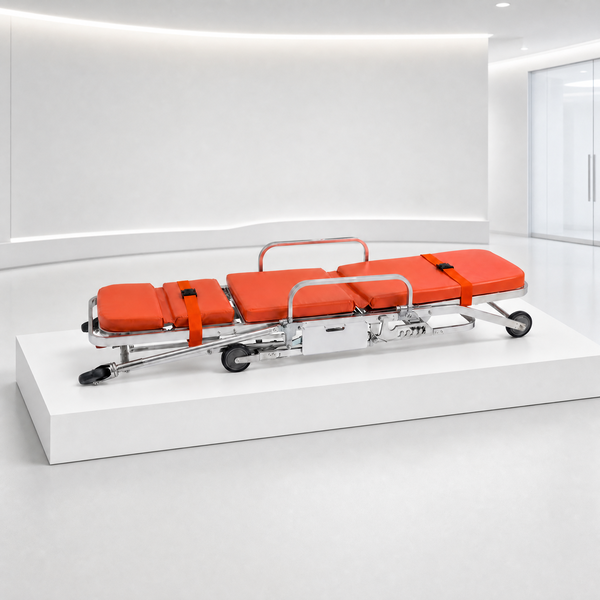
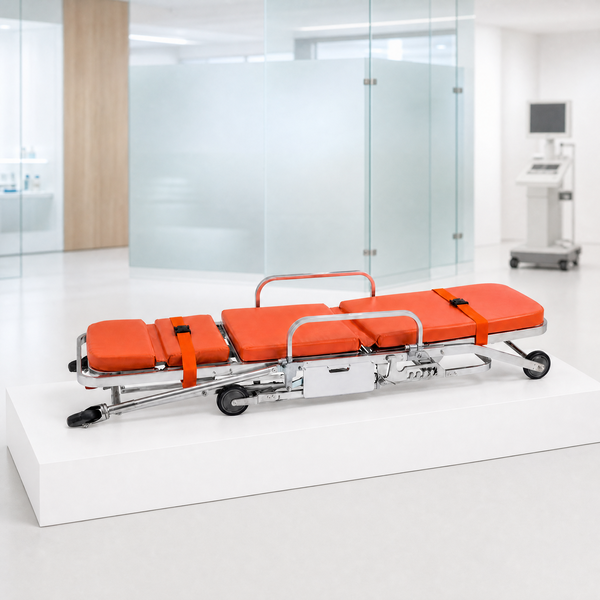
Key Specifications for Quality Ambulance Stretchers

Zhangjiagang Xiehe Import & Export Co., Ltd.

application/ambulance-stretcher, application/ambulance-stretcher, 
Inquiry
Inquiry

ambulance stretcher

Ambulance stretchers are critical components in emergency medical services, designed to facilitate the safe transport of  patients  from the scene  of an incident  to medical facilities.  For B2B  buyers, key concerns  typically revolve  around the stretcher's  specifications,  reliability, and  supplier trustworthiness. This article  aims to provide  a comprehensive understanding of ambulance stretchers, covering essential  specifications, sourcing  options, installation  guidance, common  issues,  and  bulk order considerations.


Why choose XieHe ambulance stretcher

Our Products

Key Specifications for High-Quality Ambulance Stretchers

When selecting an ambulance  stretcher, several key specifications should be taken into account:

Weight Capacity: The  stretcher  must support the maximum weight of patients, typically ranging from 250  to 500 lbs. Consideration of this factor ensures safe transport without risk of failure.

Material Composition:  Common materials include aluminum and high-strength plastics. Aluminum offers a lightweight  design, while  high-strength plastics provide durability and ease  of cleaning,  essential for infection control.

Dimensions:  Standard stretchers usually measure around 72  inches in length and 24 inches  in width. However, customization may be necessary based  on specific application needs, such as compatibility with different ambulance models.

Adjustability:  Many modern stretchers feature adjustable  backrests and leg sections, allowing for  patient comfort  and stabilization. This flexibility is crucial in emergency situations.

Safety Features: Look for models equipped with secure locking mechanisms, safety straps, and reflective  materials for visibility in  low-light conditions. These features enhance patient safety during transport.

Understanding these specifications helps buyers evaluate options  based on operational requirements and patient care standards. For more advanced solutions, consider our Stair Solution options that integrate with stretchers for improved accessibility.

Frequently Asked Questions

Our Blog Posts

What Our Partners Say

Finding Reliable Ambulance Stretcher Suppliers

Finding Reliable Ambulance Stretcher Suppliers

Identifying  trustworthy suppliers is paramount for B2B buyers. Here are key considerations:

Certifications: Ensure suppliers  hold relevant certifications such as CE, FDA, and ISO 13485, which demonstrate compliance with international quality standards in medical manufacturing.

Experience: Suppliers with  a proven track record  in the medical equipment industry are more likely to  understand the nuances of product quality and customer service.

Customization Capabilities: A  manufacturer  that offers customization can tailor stretchers to  meet specific needs, such as  incorporating additional features or branding.

Global Reach: Consider suppliers with a wide distribution network. Companies like Zhangjiagang Xiehe  Import Export Co.,  Ltd. serve over 30 distributors across  120 countries, highlighting their  capability to handle diverse market  demands.


Customer Reviews and References: Look  for testimonials or case studies  that exemplify the supplier's reliability and customer service. This feedback can provide  insights into the supplier's performance and product quality.

By focusing on these  factors, buyers can establish  a reliable supply chain for ambulance stretchers.

Installation Guidance for Efficient Use of Ambulance Stretchers

Installation Guidance for Efficient Use of Ambulance Stretchers

Proper installation and  use of ambulance stretchers are crucial for  safety  and efficiency. Here  are practical steps and tips:

Training: Ensure that all personnel involved in the transport of patients are adequately trained in using the stretcher. This includes understanding locking mechanisms and how to  secure patients safely.

Compatibility Check: Before  installation,  confirm that the stretcher is compatible  with the specific ambulance model. This  includes checking  dimensions and weight limits to avoid operational issues.

Regular Maintenance: Implement a routine inspection schedule to check  for wear and tear. This includes checking  the  integrity of locks, straps, and wheels to ensure they function correctly.

Emergency Protocols:  Develop clear protocols for emergency situations, including quick release mechanisms  and how to operate the stretcher  under various conditions.

Feedback Loop: Encourage feedback from staff on the  stretcher's performance to identify areas  for improvement or potential issues. This helps maintain a high standard of patient care.

Following these guidelines will enhance the operational efficiency  and  safety of using ambulance stretchers. Additionally, utilizing products like the Manual Stair Chair can further enhance patient transport capabilities.

Common Problems with Ambulance Stretchers and Effective Solutions

Common Problems with Ambulance Stretchers and Effective Solutions

Several common issues can arise  with ambulance stretchers. Understanding  these challenges and their solutions can improve operational reliability:

Mechanical  Failure: Common mechanical issues include problems with locking mechanisms  or wheel malfunctions. To mitigate these, conduct  regular maintenance checks  and  replace worn parts promptly.

Weight Capacity Exceeded: Overloading stretchers can  lead to structural failure. Always verify the weight of the patient and any additional equipment before transport.

Difficult  Maneuverability: If the stretcher is difficult to  maneuver, this may indicate wheel issues or improper assembly. Ensure wheels are properly lubricated and check for any obstructions.

Inadequate  Safety Features: If stretchers lack necessary safety features, consider upgrading to  models with  improved locking systems and safety straps.  Regularly assess the stretchers for compliance with safety  standards.

Poor Hygiene: Stretchers must be easy to clean to prevent infections. Choose materials that are resistant to  stains and can withstand disinfectants.

By proactively addressing these issues,  buyers can enhance  the  reliability and safety of  ambulance stretchers in emergency situations.

Where to Source Bulk Orders of Ambulance Stretchers Globally

Where to Source Bulk Orders of Ambulance Stretchers Globally

Sourcing  bulk orders of  ambulance stretchers requires strategic planning. Here are essential  steps to follow:

Market Research: Conduct research to identify potential suppliers who specialize in medical equipment and have  a reputation for reliability and quality.

Request for Quotation (RFQ): Prepare a detailed RFQ that includes  specifications  like model, dimensions,  weight capacity, and any customization requirements. This will help  suppliers  provide accurate pricing and lead times.

Minimum  Order Quantities (MOQ): Be aware of the supplier's MOQ, as this  can vary  significantly. Understanding this information early in the negotiation process can help in budgeting and planning.


Shipping and  Delivery: Take into account shipping times and costs. Suppliers with a global distribution network can  offer more flexible delivery options, ensuring timely access to products.

Quality Assurance: Before finalizing bulk  orders, discuss  quality assurance processes with suppliers. Confirm that they have rigorous testing and inspection protocols to ensure that all products meet necessary standards.

By following these steps,  buyers can secure bulk orders of  ambulance stretchers that  meet their operational needs and standards.