Essential Guide to Orthopedic Scoop Stretchers

Zhangjiagang Xiehe Import & Export Co., Ltd.

application/orthopedic-scoop-stretcher, application/orthopedic-scoop-stretcher, 
Inquiry
Inquiry

orthopedic scoop stretcher

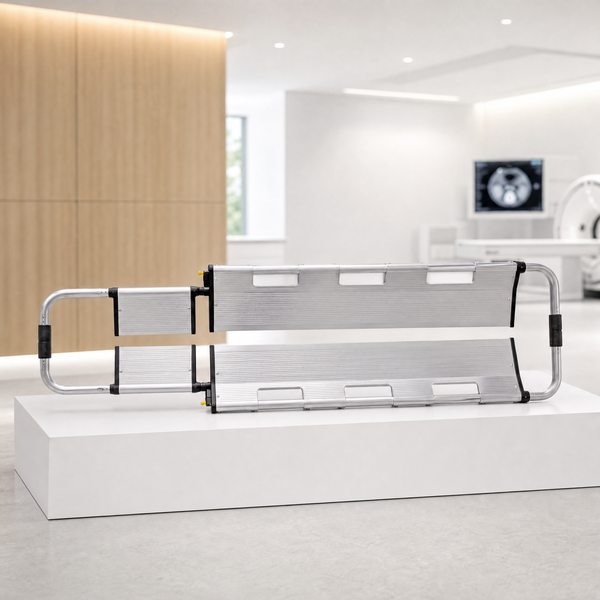
An orthopedic scoop  stretcher  is  a specialized medical  device designed for the safe transport of  patients with  suspected spinal  injuries. This critical tool is  essential in emergency medical situations, allowing for efficient and secure handling of  patients without exacerbating injuries. As a  purchasing manager or distributor, you may have concerns about specifications, quality, and application  suitability. This article will provide in-depth  insights into key specifications, common issues, cost factors, installation guidance, and real-world  applications of orthopedic  scoop  stretchers,  assisting  you in making  informed purchasing  decisions. For more information on related equipment, you can check our Funeral Home Products.

Why choose XieHe orthopedic scoop stretcher

Our Products

Key Specifications to Consider for Orthopedic Scoop Stretchers

When evaluating orthopedic scoop stretchers, several key specifications must be taken into account:

Material  Composition: The stretcher should  be made from high-strength, lightweight materials such as aluminum or reinforced  plastic. These materials not only ensure durability but also facilitate easy handling and transport.

Weight Capacity: Confirm the maximum weight limit of the  stretcher, which typically ranges from 250 to 500  pounds. This is crucial for ensuring it  can  accommodate a wide range of patients safely.

Dimensions: The dimensions of the stretcher should be compatible with your emergency response vehicles and storage facilities. Standard  widths range from 16 to 22 inches,  while length varies, so ensure you choose  a  size that fits your requirements.

Safety Features: Look for features such as secure locking mechanisms, padded  handles for comfort, and reflective strips for visibility  in low-light  situations. These enhance safety for both the patient and the emergency personnel.

Portability: The stretcher should be designed for  easy disassembly or folding, allowing for efficient storage and transport. Lightweight models improve maneuverability in tight spaces.

Certification: Ensure that the stretcher meets relevant medical standards, such as CE, FDA, and  ISO 13485, which indicate  compliance with safety and quality requirements.

Understanding these specifications  will help you select a model that meets your operational needs and ensures patient safety during transport.

Frequently Asked Questions

What is an orthopedic scoop stretcher?

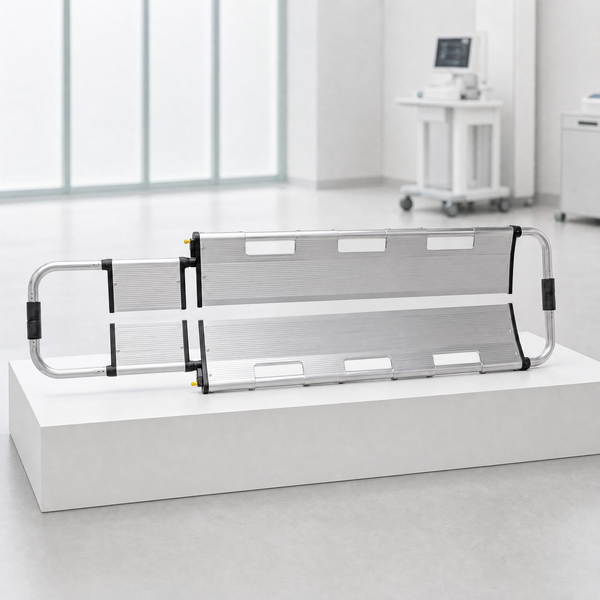
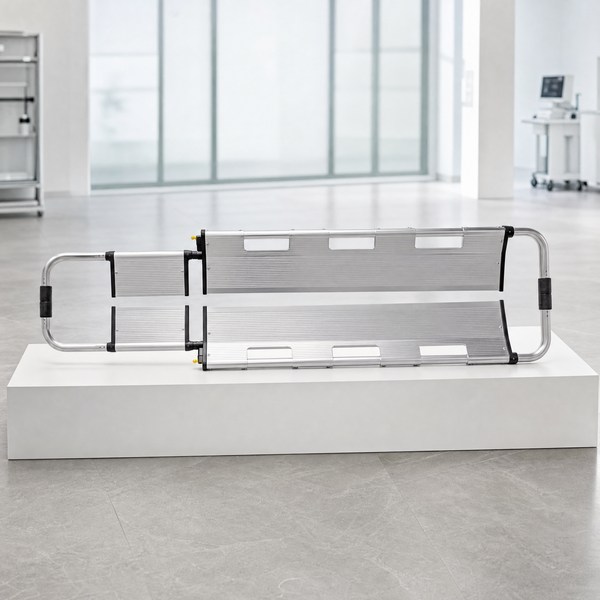
An orthopedic scoop stretcher separates into two longitudinal halves to lift and transport patients with minimal movement, protecting spine and fractures during transfer.
Constructed from high-strength, radiolucent materials with CE, FDA, and ISO 13485-certified production standards for quality and safety.
Yes. We offer customization options including size, color, straps, and accessories to meet specific clinical or operational requirements.
Yes. Designed for pre-hospital emergency care, ambulance, and hospital settings to safely immobilize and transport patients.
We supply over 30 distributors across 120 countries, provide product documentation, after-sales support, and can handle international shipping and compliance.

Our Blog Posts

What Our Partners Say

Common Problems and Solutions for Orthopedic Scoop Stretchers

Common Problems and Solutions for Orthopedic Scoop Stretchers

Even with high-quality orthopedic scoop stretchers, users may encounter common issues.  Here are some problems and practical solutions:

Difficulty in Assembly: Some models may have complex assembly procedures. To mitigate this, ensure that the  stretcher comes with  clear, concise instructions, and consider providing training sessions for staff.

Limited Weight Capacity: If a stretcher  is frequently  used for heavier patients, it  may lead to structural failure. Always  verify the weight capacity and choose a  stretcher designed for higher loads if necessary.

Wear and Tear:  Frequent use can lead to wear on moving parts or locking mechanisms. Regular maintenance checks should be implemented to  address any issues before they compromise safety.

Compatibility with Other  Equipment: Sometimes, stretchers may not fit properly in vehicles or with  other emergency equipment. Assess compatibility during the selection  process and  ensure that  the stretcher can be utilized effectively within your existing  systems.

By anticipating these  issues and  implementing preventative measures,  you can enhance the efficiency and safety of your emergency response. Additionally, consider utilizing our Manual Stair Chair for more versatile transport options.

Understanding the Cost Factors of Orthopedic Scoop Stretchers

Understanding the Cost Factors of Orthopedic Scoop Stretchers

The cost of orthopedic scoop stretchers can vary widely based on several factors:

Material Quality: Higher-quality materials typically result in higher costs but  offer better durability  and  safety, which can be a long-term investment.

Design Features: Advanced features such as additional safety  mechanisms, custom padding, or  lightweight designs may increase the price. Determine which features are essential for  your  operations.

Manufacturer Reputation: Established manufacturers with a proven track record may charge a premium for their products  due to their reliability and quality assurance processes.

Volume Discounts: Purchasing  in bulk can often lead to significant  savings. If your organization requires  multiple stretchers, inquire  about  bulk pricing options.

Shipping and Handling: Consider the costs associated with  shipping, especially if importing  from international suppliers. These  costs can  affect your  overall budget.

Understanding these cost factors will enable you to budget effectively and make informed purchasing choices.

Installation Guidance for Optimal Use of Orthopedic Scoop Stretchers

Installation Guidance for Optimal Use of Orthopedic Scoop Stretchers

Proper installation and setup are crucial for the  effective use of orthopedic scoop stretchers. Here are key steps to  ensure optimal use:

Familiarization with Components: Review all  parts of the  stretcher, including locking  mechanisms and handles. Staff should be trained on how to operate these  components safely.

Testing Before Use: Conduct a thorough inspection of the stretcher before its first use. Check for any manufacturing defects, ensuring  that all components are functioning correctly.

Secure Placement: When placing  the  stretcher  in an emergency vehicle or designated storage, ensure it is  secured properly to prevent movement during transport. Use any  provided straps or locking  mechanisms.

Regular  Maintenance: Establish a routine maintenance schedule to inspect the stretcher for wear and  tear. Address any issues immediately to maintain  safety standards.

User Training: Provide comprehensive training for all personnel on the  proper techniques for lifting and securing patients on the stretcher. This minimizes the risk of injury to both the patient  and the  responders.

By following these  guidelines, you can ensure that your orthopedic scoop stretcher is used safely and effectively in emergency situations.

Applications of Orthopedic Scoop Stretchers in Emergency Situations

Applications of Orthopedic Scoop Stretchers in Emergency Situations

Orthopedic scoop stretchers are used in various emergency  scenarios,  making them an essential component of emergency response  teams. Here are some  common applications:

Spinal Injury Management: The design of scoop stretchers allows for safe transfer of patients with suspected spinal injuries without  compromising  spinal alignment.  This is  crucial in preventing further injury.

Rapid Response Situations: In situations requiring quick evacuation, such as natural disasters or accidents, orthopedic scoop stretchers enable emergency personnel  to quickly and efficiently transport patients.

Patient Transfer in Hospitals: These stretchers can also be used within  hospital settings to move patients between departments, especially when spinal injuries are suspected or when  immobilization is necessary.

Sports Injuries: In sports events,  scoop stretchers are used to quickly transport injured athletes from the field to medical facilities, ensuring their safety during transit.

Multi-Patient Scenarios: During mass casualty incidents, having multiple orthopedic  scoop stretchers on hand  allows for the simultaneous transport of several patients, enhancing the effectiveness of emergency care.

Understanding these applications will help you appreciate the versatility  and necessity of orthopedic scoop stretchers in your emergency response  planning. <a href="/stretcher"><strong>Stretcher</strong></a> options are also available to complement your needs.

By considering the specifications, common issues, cost factors, installation guidance, and practical  applications outlined  , you will be better  equipped to make informed decisions when sourcing orthopedic scoop stretchers for your operations.