Key Specifications for Sourcing EMS Stretchers

Zhangjiagang Xiehe Import & Export Co., Ltd.

application/ems-stretcher, application/ems-stretcher, 
Inquiry
Inquiry

ems stretcher

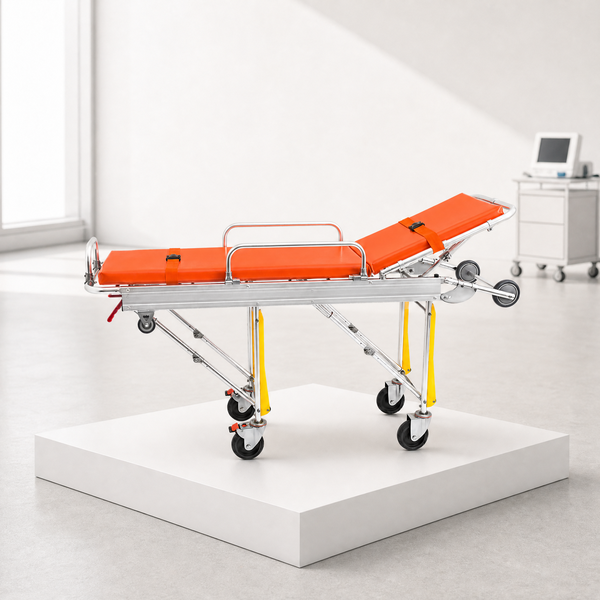
When sourcing  EMS stretchers, it is crucial for B2B buyers—such as  purchasing  managers, medical  professionals, and  emergency  service providers—to understand the specific requirements and functionalities of  these  essential devices. EMS  stretchers are designed for  efficient patient transport in emergency  medical situations,  and their selection involves several critical factors including specifications, installation requirements, and  potential challenges.  This  article aims to  provide  practical  insights  into evaluating EMS stretchers, helping buyers make informed purchasing  decisions.

Why choose XieHe ems stretcher

Our Products

Key Specifications to Evaluate When Sourcing EMS Stretchers

When sourcing EMS stretchers, several key specifications  should be evaluated to ensure that they meet the operational requirements of emergency medical services. 

Weight Capacity: The stretcher should comfortably support  the maximum weight expected in your specific application. Standard EMS stretchers often have weight capacities ranging from 250 to 700 pounds. Buyers should confirm that the selected model can accommodate the intended  patient demographics, including those who may require additional support.

Material Composition: The materials used  in the stretcher significantly impact its durability and performance. Common materials include aluminum, which offers a  lightweight yet strong  structure, and high-density plastics that  are resistant to wear and moisture. It’s crucial to choose materials that  can  withstand the rigors of emergency use while being easy to clean and disinfect.

Dimensions and Portability: The dimensions of the stretcher should be appropriate for both patient  comfort  and ease of transport. Consider the folded dimensions for  storage and transport in ambulances or emergency vehicles. Additionally, assess features like foldability and weight, which affect portability.

Safety Features: Look for stretchers with safety  features  such as secure locking mechanisms, safety straps, and anti-slip  surfaces. These are essential for protecting both the patient and the  medical personnel during transport.

Certification Compliance: Ensure that  the EMS stretcher complies with relevant certifications such as CE, FDA, and ISO 13485. This not only assures quality but also aligns with regulatory standards in various markets.

By thoroughly evaluating these  specifications, buyers can select EMS stretchers that meet their  operational needs and ensure patient safety during transport.

Frequently Asked Questions

Our Blog Posts

What Our Partners Say

Installation Guidance for EMS Stretchers in Various Settings

Installation Guidance for EMS Stretchers in Various Settings

Correct installation  of EMS stretchers is vital for operational efficiency and safety. Here are considerations for different environments:

Ambulances: In ambulances, stretchers must be securely mounted  to  prevent shifting during transit. Most modern  ambulances come equipped with dedicated  mounting systems. Ensure that  the stretcher chosen is compatible  with the vehicle's  mounting system and that all locking mechanisms are functioning  correctly.

Hospitals: When used within hospital settings, stretchers should be easy to maneuver through tight spaces. Check  that the stretcher fits through standard doorways and hallways. Additionally, consider using stretchers  with wheels that  can navigate smoothly over various  floor surfaces, including tiles and  carpets.


Outdoor Settings: For  outdoor emergency  situations, stretchers should be lightweight  and designed for rough terrain. Buyers should look for features such as large wheels or handles that facilitate movement over uneven ground.

Training Facilities: Installation in  training environments should allow for easy assembly and disassembly. Ensure that staff are trained on the correct usage and setup to  maximize efficiency during emergency responses.

By following these guidelines, organizations can ensure that their EMS stretchers are installed correctly and are ready for quick deployment when needed.

Common Problems with EMS Stretchers and Effective Solutions

Common Problems with EMS Stretchers and Effective Solutions

Despite their  robust design, EMS stretchers can encounter issues that may hinder their performance. Here are some common problems and recommended solutions:


Wear and Tear on Components: Frequent use can lead to  wear on wheels and locking mechanisms. Regular inspections should be conducted to identify any signs of deterioration. Immediate replacement of  worn components will help maintain safety and functionality.

Difficulty in Folding or Unfolding: If the mechanism for folding or unfolding the stretcher becomes stiff or jammed, it can  delay  patient transport. Ensuring regular lubrication and maintenance of moving parts can prevent these issues. In addition, training staff on proper usage can minimize misuse.

Weight Distribution Issues:  Improper weight distribution can lead to instability during transport. Buyers should ensure that staff are trained to position  patients correctly on the stretcher, using safety straps to secure  them  effectively.


Compatibility with  Other Equipment: Incompatibility with other emergency equipment  can lead to operational delays. Buyers should verify  that the  stretcher can be integrated with other tools and devices used in emergency situations, such  as oxygen tanks or monitoring equipment.

By  proactively  addressing these common  problems,  organizations can enhance the reliability of their EMS stretchers and ensure optimal performance during emergencies.

Where to Find Reliable Suppliers for EMS Stretchers Globally

Where to Find Reliable Suppliers for EMS Stretchers Globally

Finding a trustworthy supplier is critical for sourcing high-quality EMS stretchers. Here are steps  to help  in identifying reliable sources:

Research and Referrals: Begin by conducting thorough research online, focusing on manufacturers with  a strong reputation in the  medical equipment industry. Referrals from industry peers can also provide insights into reliable suppliers.

Check Certifications: Ensure that  potential suppliers hold relevant certifications such  as CE, FDA, and ISO 13485.  This indicates adherence to international quality standards  and regulatory compliance.

Evaluate Customization Options: Many suppliers offer customization services tailored  to specific needs. Evaluate suppliers that can provide  options for color, size, and features that align with  your operational requirements.

Assess Global Reach: Look for suppliers with a proven track record of servicing multiple  countries. This is  crucial for ensuring consistent quality and support across different markets.

Request Samples: Before placing a bulk order,  request samples to evaluate the product  quality and functionality. This step can prevent costly mistakes  later.

By following these steps, buyers can identify reliable suppliers  that will meet their  needs for  EMS stretchers.

 
Applications of EMS Stretchers in Emergency Medical Services

Applications of EMS Stretchers in Emergency Medical Services

EMS stretchers are versatile tools that find applications across  various emergency medical scenarios:

Ambulance  Transport:  The primary role of EMS stretchers is in  ambulance transport, where  they facilitate safe and  efficient patient transfers from the scene of an emergency to  medical facilities.

Disaster  Response: In disaster situations, such as natural disasters or  mass casualty incidents, EMS  stretchers are crucial for quickly and safely transporting injured individuals to  safety or medical care.

Sports Events: During sporting events, EMS stretchers are used to transport injured athletes off  the field to ensure they receive prompt medical attention.

Hospital Transfers:  Within hospital settings, EMS stretchers are utilized for transferring patients between departments,  ensuring  their comfort and safety during movement.

Community Events: In public gatherings or community events, having EMS stretchers readily  available can ensure immediate response capabilities in case of  medical  emergencies.

Understanding these  applications helps buyers appreciate the importance of selecting  the right EMS stretcher tailored to specific operational needs, ensuring readiness for various situations.